

Behind Blue Eyes by rock band The Who represents Macbeth’s hidden ambitions and guilt beneath his outward facade of loyalty and bravery. The song opens with “No one knows what it’s like / To be the bad man / To be the sad man / Behind blue eyes / No one knows what it’s like / To be hated / To be fated.” This parallels Macbeth, plotting the murder of his king. The song also mentions sadness, which Macbeth experiences through his inner turmoil. Macbeth struggles to make the final decision, which undoubtedly causes him great guilt and depression. The next lines are “None of my pain and woe / Can show through / But my dreams, they aren’t as empty / As my conscience seems to be.” These lines are almost perfect for describing Macbeth. To avoid arousing suspicion, Macbeth uses a false appearance to conceal his intentions. At the same time, Macbeth dreams of the witches’ prophecy, hailing him as the King of Scotland. He must ditch his morals in order to make the prophecy true.

The title of Lady Gaga’s Poker Face refers to a Poker strategy that involves the meticulous control of one’s facial expressions in order to conceal bluffs. During Macbeth’s deceitful rise to power, the Macbeths similarly need to hide their true intentions. After all, they are planning the murder of their king. In the song, the chorus repeatedly boasts the singer’s poker face, singing, “Can’t read my, can’t read my / No, he can’t read my poker face.” This corresponds to Lady Macbeth’s confidence that their plan will succeed. Following the assassination, Macbeth is drawn into immense guilt, which “breaks” his poker face. Attendees at Macbeth’s home begin to notice his strange behavior, which ultimately leads to his downfall.

Avril Lavigne’s Complicated sums up Antigone's straightforward moral stance within Creon’s complex political environment. Antigone’s intentions are clear: to provide proper burial rites for her fallen brother. Conversely, the egotistical Creon declared Polynices a traitor whose body should be unburied. In his mind, Antigone is defying his laws just to be disobedient. The frustration of Creon’s stubbornness reverberates in the lines, “Tell me / Why do you have to go and make things so complicated? / I see the way you’re acting like you’re somebody else / [it] Gets me frustrated.” Despite Antigone’s attempts to persuade the tenacious Creon that burial is a fundamental unwritten law of the gods, she is punished with death. At the end of the play, Creon suffers the consequences of the gods and learns that his myopic assumption is wrong.

Boulevard of Broken Dreams by Green Day symbolizes Oedipus’s desperate, lonely quest for truth and the harsh reality he uncovers. The song's first lines are “I walk a lonely road / The only one that I have ever known / Don’t know where it goes / But it’s home to me, and I walk alone.” The first line describes Oedipus’s solidarity when searching for Laius’s killer. He demands an answer from his people, who respond to his call with silence. The next line accurately characterizes the eternity of Oedipus’s lifelong search, as prophecy will come true one way or another. The third line is ironic, as it suggests that Oedipus should feel “at home” on his journey. Little does he know, he has been searching for himself. The metaphor of walking a lonely road represents how shallow of an understanding Oedipus has about the truth at the beginning of the play.
By the end of Oedipus, Oedipus has discovered the implications of his life. Creep by Radiohead matches Oedipus’s feelings of inadequacy and horror upon learning the truth about his origins. The chorus of Creep sings painfully, “But I’m a creep / I’m a weirdo / What the hell am I doin’ here? / I don’t belong here.” Just like these lines, Oedipus’s revelation frames himself as an abomination. He has committed not only patricide but also incest with his mother. The recognition of these criminally heinous truths is enough to make Oedipus cut out his eyes. Additionally, if the end of Creep is interpreted as a part of Oedipus, the song describes a woman, presumably Jocasta, as “She’s running out the door / She’s running out / She run, run, run, run.” A fitting ending, considering the events of the play.
Mad World, covered by Gary Jules, is a melancholic song about a man in his apartment window watching people go about their lives. The strange perspective and depressing diction can be interpreted as highlighting the tragic disparity between Oedipus's perception of himself and the reality of his fate. Initially viewed as a well-meaning man trying to investigate the murder of the last king, Oedipus is left as an empty shell of himself, doomed to face the punishments he set for himself. Similarly, in Mad World, a hint of happiness is immediately crushed by painful reality. It goes, “Hello, teacher! Tell me, what’s my lesson? / [And she] look right through me, look right through me.” Sometimes, we may be better off not knowing the truth.
Gotye and Kimbra's Somebody That I Used To Know accurately relates to Amir’s realization of his betrayal and the lost bond with Hassan in The Kite Runner. In the first loop of the chorus, Gotye sings, “But you didn’t have to cut me off / Make out like it never happened and that we were nothin’ / And I don't even need your love / But you treat me like a stranger, and that feels so rough.” Even though the song is about lovers growing distant, it holds a similar overall meaning. On the surface, Amir simply stopped talking to Hassan. In reality, however, Amir eternally regrets all the choices he made. In the lines leading up to the second loop of the chorus, Kimbra sings about how Gotye had hurt her. Assuming Gotye and Kimbra sing to one another, this parallels Hassan’s forgiving but broken character. Hassan’s letter to Amir is forgiving, but nothing can repair the two’s relationship.
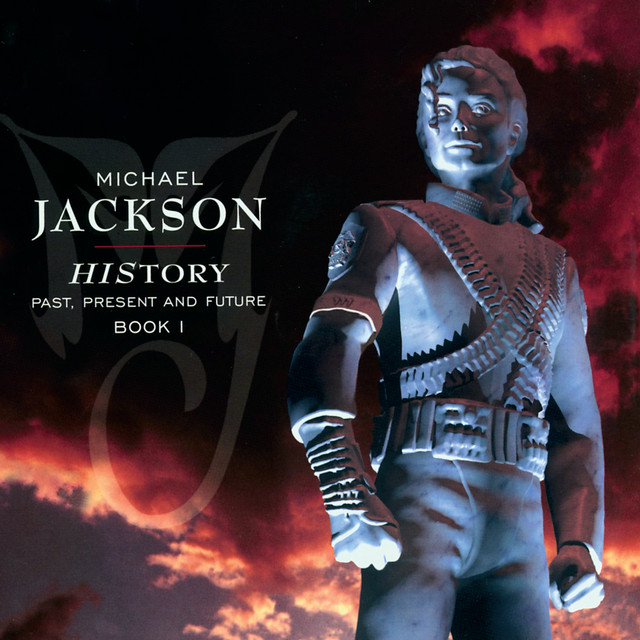
Man in the Mirror is reminiscent of Amir’s journey in The Kite Runner. Amir’s childhood was marred after he chose to do nothing about the rape of his best friend, Hassan. Because of this, Amir entered adulthood with severe trauma and guilt. One day, Amir learns of Hassan’s only child, trapped in Kabul. Redemption appears unattainable for Amir, yet he risks his stable life in America to rescue the boy. Following Michael Jackson’s lyrics, “If you wanna make the world a better place / Take a look at yourself and then make a change,” Amir recognizes his flawed perception of his past. He then takes action to break his history of being a bystander in challenging scenarios. After safely returning to America, Amir finally understands the reality of redemption: If he never tries, he will certainly never reach it.

All The Things She Said by t.A.T.u. for Everything I Never Told You reflects Marilyn’s hidden dissatisfaction and the contrast between her outward role and internal desires. The chord progression used by t.A.T.u. alternates between evoking feelings of anxiety when played softly and rage when played loudly. The lyrics repeat the same phrase over and over: “All the things she said / All the things she said / Runnin’ through my head / Runnin’ through my head.” This almost perfectly encapsulates Marilyn’s internal struggle. She is perpetually anxious over whether she should leave everything behind and live the life she wants, but she is also angry at herself and her mother for causing her to live the life she does. All the while, Marilyn must put on a facade of satisfaction. As evident in the book, the Lee family falls apart without Marilyn.
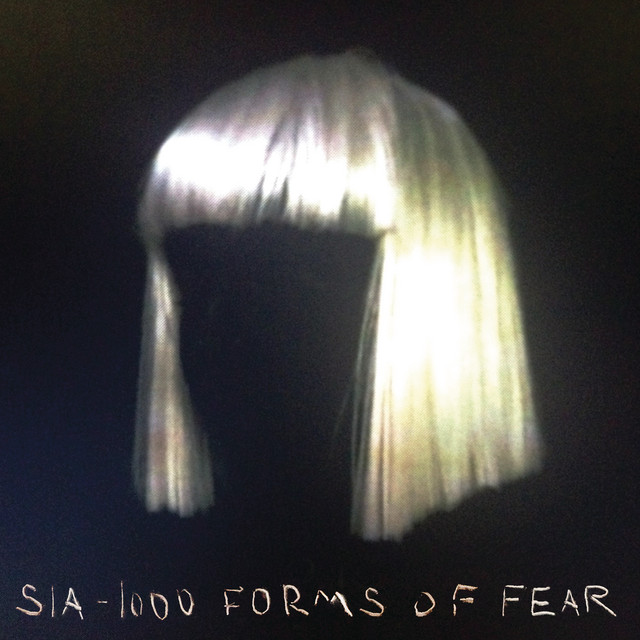
Nath from Everything I Never Told You faces a huge loss when his sister dies unexpectedly. Despite his pain, and out of his role as the only boy among the Lee siblings, Nath has to stand strong as the rest of his family is crumbling. Chandelier by Sia features numerous verses that come together to symbolize Nath’s outward appearance of control while he deals with internal pain and loss alone. The song starts with “Party girls don’t get hurt,” representing Nath’s responsibility to stay strong for his family. Yet, next, in a depiction of suffering, the song continues, “One, two, three, one, two, three, drink / One, two, three, one, two, three, drink.” This aligns with Nath trying to use alcohol to numb his emotions. It doesn’t work. The line “Sun is up, I’m a mess” is followed by “Feel my tears as they dry.” Nath can feign control, but Lydia’s death doesn’t leave any of the Lee family without suffering.
. It's being deployed using CloudFlare's Pages. View Documentation.